


 EN
EN  EL
EL 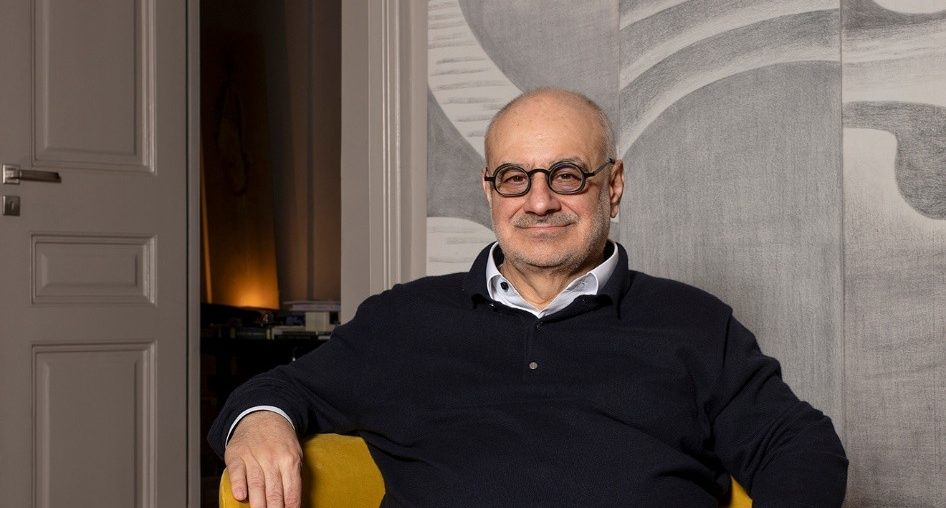
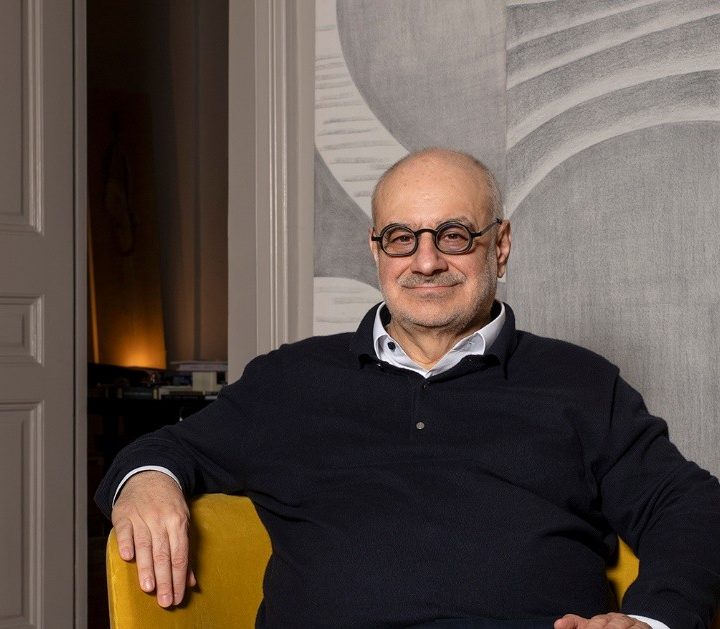

Mr Orestis Tsakalotos featured in Forbes
Orestis Tsakalotos, Executive Chairman of Qualco Group, was recently featured in Forbes in an interview with Nikos Kotsikopoulos.
In the discussion, he shared his views on Qualco Group’s strategic evolution, the growing role of artificial intelligence, international expansion, and the principles shaping the Group’s future direction.
Below is an excerpt from the conversation between Forbes and Orestis Tsakalotos.
Q: In recent years, Qualco Group has not merely recorded growth, but undergone a meaningful transformation. How would you describe this transition, and how it the company now placed within the broader technology landscape?
A: In recent years, Qualco Group has evolved significantly. But for us, this is not a destination. It is simply the next point of departure. In an environment that is constantly changing, nothing can be taken for granted, neither market position nor competitive advantage. What remains constant is our mindset and the values on which we build.
That is why we perceive transformation as a continuous process. We are constantly reassessing how we create value and how we design our solutions. Today, our role is to operate as a technological core expressed through multiple delivery models: as software, as a platform, and as infrastructure on which complex, enterprise-grade ecosystems can be developed.
The key question is not where we stand today. It is that we are ready for what comes next. And what comes next is already reshaping the landscape. Artificial intelligence is not simply another technological development. It is a catalyst changing the way we design, operate and create value.
Q: How central is artificial intelligence now to Qualco’s business and technology model? Are we talking about the evolution of existing solutions, or a deeper change in how you design products and services?
A: For us, artificial intelligence does not begin today. The fintech sector has always been built on data and the ability to predict. What is changing now is the next stage: the shift from prediction to action.
This is precisely where agentic AI comes in, redefining the role of systems, from analytical tools into mechanisms that guide decisions and generate outcomes. This transition now characterises all our activities. From software to platforms, it is influencing the very way we design solutions, always with the discipline required in a regulated environment.
However, the most meaningful change is not technological. If the organisation does not adapt first, no technology will be enough. This means reassessing core assumptions and “unlearning” practices, starting from leadership downwards.
It is understandable that there is considerable concern regarding the impact of artificial intelligence. For us, however, the objective is clear. We move quickly, with discipline and with a clear sense of direction.
Q: We are seeing Qualco broaden its role beyond traditional fintech. In practical terms, what does this shift towards a more deeptech profile mean?
A: The move towards a more deeptech profile is not a change of direction. It is a natural evolution. We began by solving specific fintech problems. Today, we are building the technology that is placed closer to the core of those problems, and beyond them. This means we are no longer confined to applications. We are systematically investing in applied research and development, infrastructure, and platforms capable of supporting more complex ecosystems and operating at scale.
In practice, this means three things. First, greater technological depth. For example, we are building systems that do not merely analyse data, but also make and execute decisions in real time, embedding AI into operational workflows themselves. Second, a different role in the market. We do not simply deliver software. We participate in designing end-to-end platforms, where multiple stakeholders, data sources and processes are connected within a single operating model. Third, the ability to address more complex challenges. For example: how decision-making can be automated in regulated environments; how transparency can be ensured in AI-driven processes; or how digital ecosystems involving multiple participants can scale effectively.
That, for us, is deeptech. Not something theoretical, but the choice to invest in meaningful innovation, backed by strong R&D, to solve problems that require depth, not merely application.
Q: In a sector evolving at great speed, what do you believe ensures sustainable technological advantage? Where is Qualco investing to stay ahead?
A: Sustainable technological advantage is not about access to technology. It is about capability; the capability to understand what is changing, invest early, and convert that into tangible results.
That is where we invest. In deep R&D, so that we do not merely follow developments; in architectures that allow us to evolve without starting again each time; in an organisation that can adapt quickly and execute consistently. At the end of the day, advantage is not what you have today. It is how quickly you can build what comes next.
Q: Qualco’s international presence is expanding dynamically. What is the strategy behind this growth, and how do you choose the markets in which you invest?
A: For us, international growth has two dimensions: geography and sectors of activity.
From a geographical perspective, we move according to real demand, not simply presence. This year, our growth has been driven mainly by Europe, the United Kingdom and the Middle East, with markets such as France showing particularly strong traction. At the same time, we see significant opportunities emerging in Asia. We invest where there are customers and genuine needs, and where it makes sense to establish a local presence with a meaningful role. The second dimension concerns sectors of activity. We focused initially on banking and credit, however the market model itself is changing. As embedded finance becomes a dominant trend, more and more sectors are incorporating financial functions.
In practice, this means the market is broadening and now concerns us across the board. Our focus extends beyond being present in more markets to being indispensable in the ones we choose.
Q: Are there elements of Greek know-how that act as a competitive advantage in international markets?
A: There are elements of Greek know-how that function as a competitive advantage, but it is important to view them realistically. What stands out is the ability to operate in complex and often unstable environments. We have learnt to adapt quickly, solve meaningful problems, and move forward without waiting for ideal conditions. This is combined with a very high level of technical expertise, which enables us to compete credibly internationally.
On the other hand, there are also areas where we need to improve. Collaboration at greater scale and a more structured, collective approach are two of these. In an international environment, the ability to align, operate consistently, and build on shared foundations is just as critical as individual flexibility.
For us, the objective is the combination of both. To retain the speed and adaptability that characterise us, while strengthening them through greater discipline and collaboration. In the end, it is not enough to adapt quickly. You must also be able to move forward in a coordinated way.
Q: In a period of intense technological change, what is the core strategic principle guiding your decisions for Qualco’s future?
A: The core principle is simple. We do not chase technology. We build the capability to harness it before it becomes obvious. That means choosing carefully where we invest, moving quickly, and executing with discipline. Because at the end of the day, advantage does not belong to whoever sees the future first. It belongs to whoever is ready to operate within it.
Read More

Qualco Group: Growth with a Responsible Footprint
Qualco Group today published its 2025 Sustainable Impact Report, documenting substantial progress with measurable results across the three ESG pillars: Environment, Society and Governance. The publication comes in a landmark year for the Group, as in 2025 its shares were listed on the Athens Stock Exchange – Euronext Athens, further strengthening its commitment to transparency, strong corporate governance and the creation of long-term value for shareholders, employees, partners, customers and society at large.

 8/10/2026

Meet our IT Operations Team
At Qualco Technology, the technology backbone of Qualco Group, IT Operations is much more than keeping the lights on. We create the environment that allows people to work with confidence, teams to collaborate without interruption, and the business to grow on solid technological foundations.
1/10/2026

Qualco Group builds capacity for its next phase of growth; LTM Adjusted EBITDA reaches a record €43.6m, and full-year guidance is reaffirmed
Qualco Group S.A. today announced its financial results for the half-year ended 30 June 2026. Revenue rose by 14%, to €101.1 million, while EBITDA increased to €13.4 million. The EBITDA margin came in at 13.2%, compared with 14.7% in the corresponding period of 2025, reflecting higher spending to strengthen project-delivery capabilities, artificial intelligence, and dual-use technology development.
15/09/2026